
"Can my dog eat this?" is one of the most common questions pet owners ask. Some human foods are safe for dogs in small amounts; others are toxic or dangerous and can cause anything from an upset stomach to organ failure or death.
This guide gives a practical safe and unsafe list of human foods for dogs—so you know what's OK as an occasional treat and what to never give. It also reminds you to keep any human-food treats within the 10% rule and to use our pet calorie calculator so your dog's main diet stays correctly portioned.
Golden Rules for Human Foods and Dogs
- When in doubt, don't feed it. A quick search or call to your vet can prevent an emergency.
- Safe doesn't mean unlimited. Even safe foods can cause diarrhea, pancreatitis, or obesity if overfed. Keep treats (including human food) under 10% of daily calories—see The 10% Rule.
- No added salt, sugar, onions, garlic, or xylitol. Many human dishes contain these; they're dangerous for dogs. Feed plain, unseasoned items when you do share.
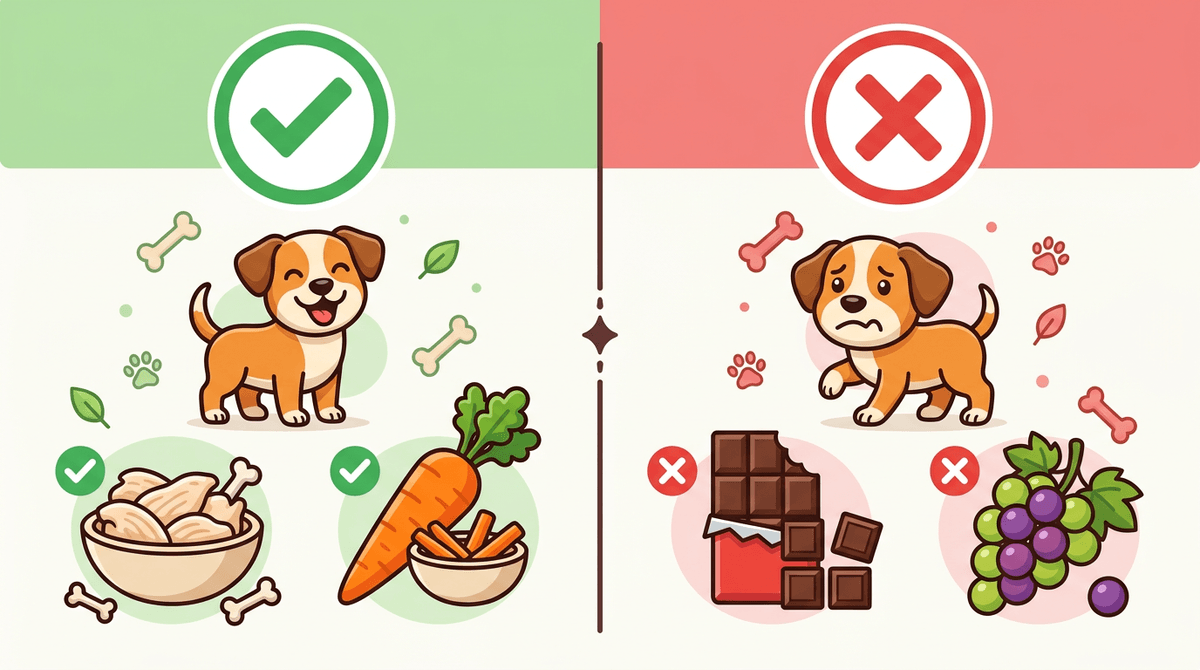
Human Foods That Are UNSAFE or TOXIC for Dogs
Never give these:
- Chocolate (especially dark and baking): Contains theobromine; can cause vomiting, tremors, seizures, heart problems, death. The darker the chocolate, the more dangerous.
- Xylitol (sugar substitute): Causes rapid insulin release, severe hypoglycemia, liver failure. Found in sugar-free gum, candy, baked goods, some peanut butters—check labels.
- Grapes and raisins: Can cause acute kidney failure in dogs. Even small amounts can be toxic.
- Onions, garlic, leeks, chives: Allium family; damage red blood cells and can cause anemia. This includes powdered, cooked, or in broths and sauces.
- Macadamia nuts: Can cause weakness, vomiting, tremors. Often combined with chocolate in cookies—double risk.
- Alcohol: Same dangers as in people; smaller bodies mean smaller doses can cause poisoning.
- Caffeine (coffee, tea, energy drinks): Stimulant; can cause restlessness, heart issues, seizures.
- Raw yeast dough: Expands in the stomach; can produce alcohol. Risk of bloat and alcohol poisoning.
- Bones that splinter (cooked chicken bones, etc.): Can perforate the gut or cause choking. See The Debate Over Raw Bones for Dogs for context on bones.
- High-fat human foods (bacon, fatty scraps, greasy leftovers): Can trigger pancreatitis. Avoid.
- Marijuana/THC products: Toxic to dogs; keep all edibles and products out of reach.
For a more complete list of dangerous foods, see Dangerous Human Foods You Should Never Give Your Pet.
Human Foods That Are Generally SAFE for Dogs (in Moderation)
- Plain cooked chicken, turkey, lean beef (no bones, no seasoning, no skin/fat in large amounts).
- Plain cooked fish (no bones, no seasoning)—source of omega-3s.
- Plain cooked egg (scrambled or boiled)—no salt or butter.
- Plain pumpkin (canned or cooked)—can help with mild digestive upset; not a full meal.
- Plain rice (white or brown, cooked)—often used in bland diets with vet guidance.
- Plain sweet potato (cooked, no skin or seasoning).
- Blueberries, strawberries, apple slices (no seeds/core)—small amounts.
- Carrots (raw or cooked, plain)—good as a low-calorie crunch; cut to avoid choking.
- Green beans (plain, cooked or raw)—low calorie, often used in weight plans.
- Plain peanut butter (no xylitol, no added salt/sugar)—calorie-dense; use sparingly.
- Plain yogurt (no xylitol, no added sugar)—some dogs tolerate it; others are lactose-sensitive.
- Cucumber, zucchini (plain)—low calorie.
Moderation means small amounts as treats, not a substitute for a complete and balanced diet. Always introduce one thing at a time to see how your dog reacts.
Foods to Avoid or Use With Caution
- Dairy: Many dogs are lactose-intolerant; small amounts of plain yogurt or cheese may be OK for some.
- Corn on the cob: The cob can cause obstruction; kernels (plain) in tiny amounts are less risky but not necessary.
- Avocado: Contains persin; risk varies. Safer to skip.
- Cherries, peaches, plums: Pits are a choking hazard and can contain cyanide; flesh in tiny amounts may be OK but not worth the risk for most owners.
- Nut butters: Only if you're 100% sure there's no xylitol; use sparingly (high calorie).
What If Your Dog Ate Something Toxic?
- Call your vet or an emergency poison control (e.g., ASPCA Poison Control) immediately. Don't wait for symptoms.
- Note what was eaten, how much, and when. Bring packaging if possible.
- Do not induce vomiting unless a professional tells you to—some substances cause more damage coming back up.
Keeping Treats in Check
Human foods that are safe can still add a lot of calories. To keep your dog at a healthy body condition:
- Count treats (including human food) toward the 10% rule.
- Base the main diet on MER and the calorie statement of the food—see our pet meal planner.
The Bottom Line
Can dogs eat human foods? Some yes, in moderation; many no. Use this safe and unsafe list to avoid toxic foods (chocolate, xylitol, grapes, onions, garlic, macadamia nuts, alcohol, and others) and to offer only safe, plain options in small amounts. Keep all treats within the 10% rule and feed a complete, balanced main diet portioned with MER.
For exact daily portions for your dog's main meals, use our pet meal planner. It uses RER, MER, and body condition so you can treat safely without unbalancing the diet.


