
Key takeaways
- Three-day trials rarely prove anything for chronic issues.
- Strict exclusion matters—otherwise you cannot interpret results.
- Chronic vomiting has many causes; diet is one variable among several.
- Weight loss, anorexia, or blood in vomit/stool warrant urgent veterinary evaluation.
Owners understandably want fast answers when a cat vomits hairballs sometimes, sometimes food, sometimes fluid. A diet trial can be useful—but only when designed with realistic timelines and medical oversight.
What a diet trial is (and is not)
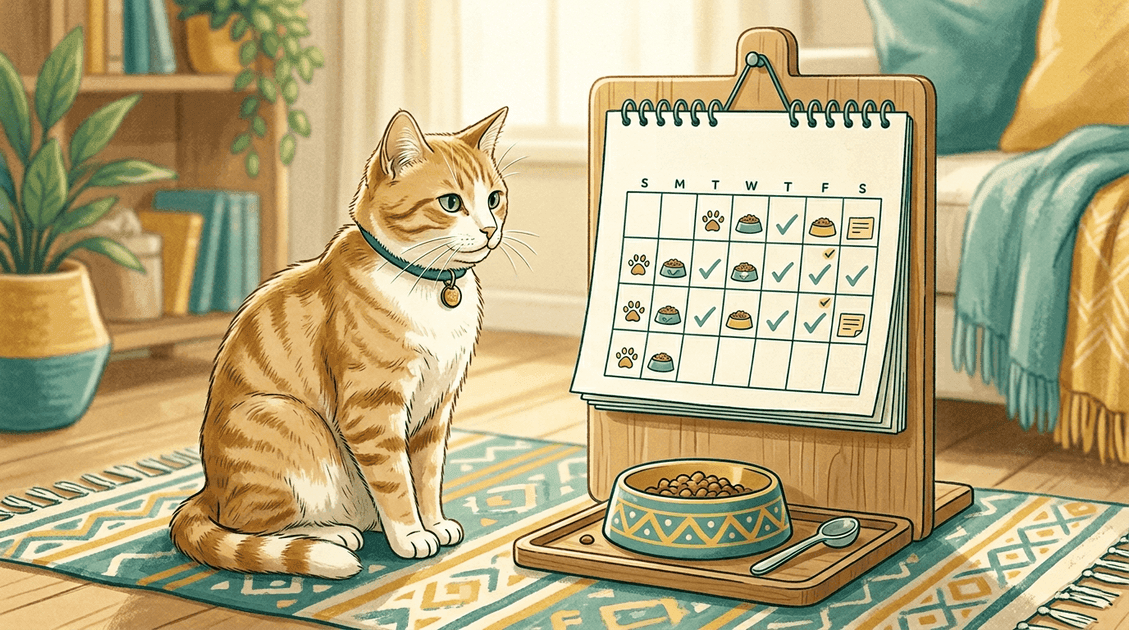
A diet trial is a structured period where the cat eats only a specific diet (often novel protein or hydrolyzed) with no flavored medications, no dental treats that sneak proteins, and no “just a lick” human food.
It is not the same as rotating flavors weekly to see what “sticks.”
Why timelines are measured in weeks
Immune-mediated food reactions and chronic inflammatory patterns do not turn on and off like a light switch. Many veterinary protocols discuss weeks of strict feeding because:
- GI lining turnover and symptom patterns take time to stabilize
- Intermittent signs create noisy data unless the diet is consistent
- Stress and environment also affect vomiting in cats
If your veterinarian proposes a trial, ask explicitly: How long is the evaluation window? What counts as failure? What is the next diagnostic step if the trial fails?
Common parallel issues your veterinarian may rule out
Depending on the case, clinicians may discuss:
- Parasites
- Metabolic disease
- Foreign body or obstruction patterns
- Pancreatitis
- Hyperthyroidism in older cats
Nutrition articles cannot replace that workup—especially if the cat is losing weight.
Practical feeding tactics during a strict trial
- Use single-source feeding (one diet, prescribed route)
- Separate cats at mealtime if needed to prevent dietary “cheating”
- Track symptoms in a simple log: date, type of vomit, appetite, stool
Palatability tips can help adherence without breaking trial rules—see heat and texture.
How fiber fits in (sometimes)
Some cats with constipation-predominant signs need fiber strategies—but that is not interchangeable with “allergy testing by kibble rotation.” If constipation is part of the picture, your veterinarian may reference structured fiber plans like megacolon and fiber.
FAQ
Can I do a food trial without a vet?
You can attempt feeding changes, but chronic GI disease is easy to misread. Professional guidance improves safety and speed.
What if my cat won’t eat the trial diet?
This is common. Your veterinarian may suggest alternatives, appetite support, or transitional strategies.
Are hairballs always benign?
Frequent vomiting should be evaluated—not dismissed as “just hairballs” without criteria.
Medical disclaimer: Chronic vomiting, weight loss, or lethargy require veterinary diagnosis. This article is educational only.


