
Key takeaways
- Go slow on diet changes—shelter food to home food transitions are a top cause of diarrhea in the first week.
- Stress (new home, new routines) can affect appetite and stool; distinguish “adjustment” from illness.
- Body condition matters more than the number on the scale in week one—use BCS and your vet’s guidance.
- This guide is educational, not a substitute for veterinary care if your dog is vomiting, lethargic, or not eating.
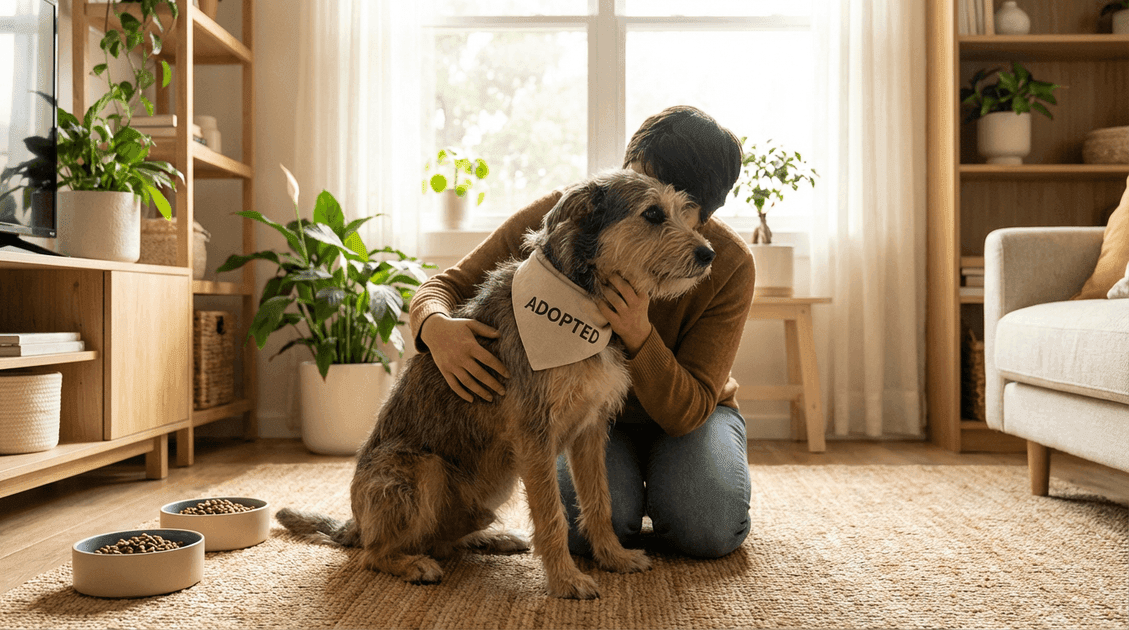
Adopting a rescue dog is one of the most rewarding decisions you can make. Nutritionally, the first month is about stability, observation, and gradual change—not perfection.
Week 1: What the shelter fed—and why it matters
If possible, obtain exact feeding instructions from the shelter or foster: brand, amount, and frequency. If you must switch foods immediately:
- Transition over 7–10 days when possible (see our transition guide below).
- If you must change abruptly due to supply issues, expect softer stool; monitor hydration and energy.
Read:
When to call the vet early
Seek veterinary advice promptly for:
- Repeated vomiting or bloody diarrhea
- Lethargy, refusal to eat beyond 24 hours (adult dog), or signs of pain
- Suspected parasites or incomplete vaccination history
Calories and body condition
Don’t guess portions based on “looks hungry.” Start with label guidance and adjust using body condition:
Stress, appetite, and training treats
Treats used during bonding and training count toward daily calories:
FAQ
Should I feed puppy food to an underweight adult rescue?
Not automatically. Life-stage food should match age and veterinary assessment—not just “thinness.”
Can PetMealPlanner help?
Yes—our calculator helps you think about portioning and goals alongside your veterinarian’s plan.
Disclaimer: Educational content only. For medical concerns, contact your veterinarian.


