
You spend a lot of time and money selecting the perfect, high-quality diet for your dog or cat. But did you know that how you store that food at home is just as important as the ingredients inside it?
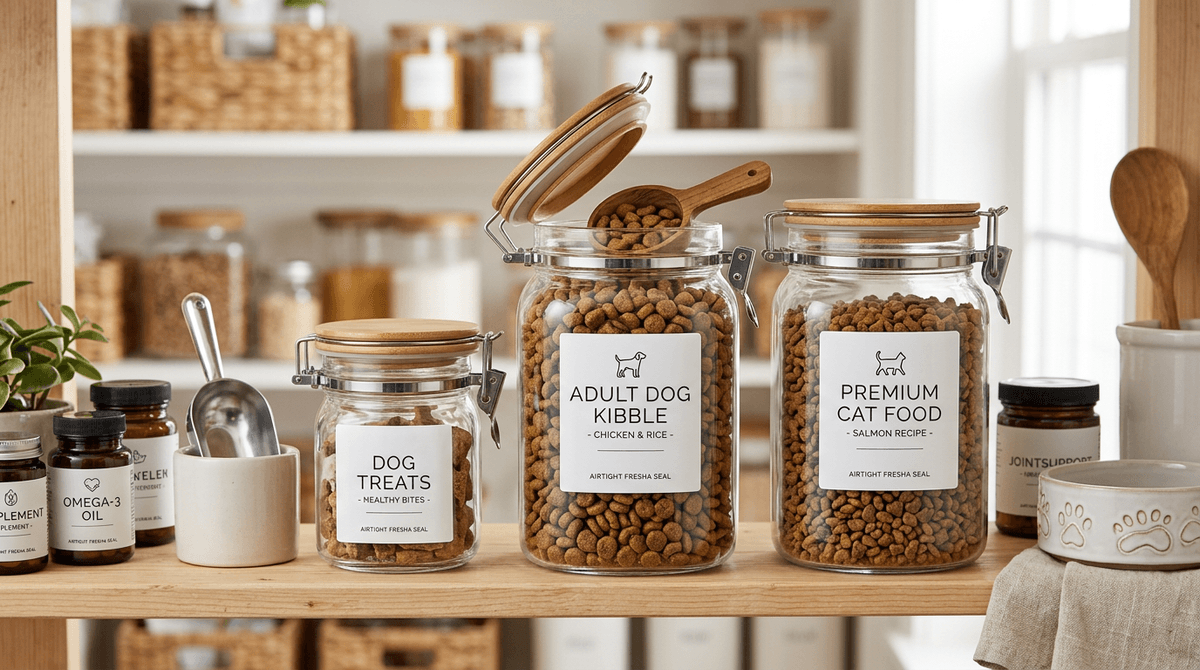
Improper pet food storage is a leading cause of food refusal, gastrointestinal upset, and even long-term health issues in pets. Exposure to air, light, heat, and moisture can cause essential fats to go rancid, degrade vital nutrients, and invite unwanted pests like storage mites and pantry moths.
In this guide, we will cover the best practices for storing both dry kibble and wet pet food to ensure every meal is safe, fresh, and nutritious.
The Dangers of Improper Storage
Before diving into the "how-to," it's important to understand what happens when pet food is stored incorrectly.
1. Rancid Fats
Dry pet foods are sprayed with fats and oils to increase palatability and provide essential fatty acids (like Omega-3s and Omega-6s). When these fats are exposed to oxygen and heat, they oxidize and become rancid. Rancid fat not only smells bad (causing your pet to refuse the food) but can also cause diarrhea, vomiting, and over time, deplete your pet's body of essential vitamins.
2. Nutrient Degradation
Vitamins and minerals, particularly Vitamin A, Vitamin E, and B-complex vitamins, are sensitive to heat and light. Storing food in a clear container in a sunny room will rapidly degrade its nutritional value.
3. Storage Mites and Pests
Storage mites are microscopic pests that thrive in dry environments like bags of flour, grain, and pet kibble. Many dogs and cats are highly allergic to storage mites, leading to severe itching, ear infections, and skin rashes. Open bags also attract rodents, ants, and pantry moths.
Best Practices for Storing Dry Kibble
Follow these golden rules to keep your pet's dry food fresh from the first scoop to the last.
Keep It in the Original Bag
The bags that premium pet foods come in are specifically designed to keep oxygen and moisture out. They feature special fat-resistant liners that prevent the oils in the kibble from seeping out and spoiling.
Do not pour kibble directly into a plastic bin. Plastic is porous. Over time, the fats from the kibble will seep into the micro-scratches of the plastic bin, go rancid, and contaminate every new batch of food you pour in.
Use an Airtight Container
Instead of pouring the food out, place the entire original bag inside an airtight storage container. This provides a double layer of protection against oxygen, humidity, and pests.
Squeeze Out the Air
Every time you open the bag to scoop out a meal, gently press the bag to force out as much excess air as possible before rolling it down and sealing it. Less oxygen means less oxidation.
Store in a Cool, Dry, Dark Place
Keep the storage container in a climate-controlled environment. Avoid storing pet food in garages, sheds, or laundry rooms where temperatures fluctuate wildly and humidity levels are high. Aim for a storage temperature under 80°F (26°C).
Buy the Right Size Bag
It can be tempting to buy the massive 40-pound bag to save money, but if you have a small dog or a single cat, that bag might sit open for months. As a general rule, you should only buy as much dry food as your pet can consume within 4 to 6 weeks of opening.
Best Practices for Storing Wet and Fresh Food
Wet food (canned) and fresh/frozen diets require entirely different handling to prevent bacterial growth.
Unopened Cans
Store unopened cans and pouches in a cool, dry place away from direct sunlight. Always check the "Best By" date and rotate your stock, using the oldest cans first.
Opened Cans
Once a can of wet food is opened, it must be refrigerated immediately.
- Use a lid: Cover the open can with a tight-fitting silicone pet food lid or transfer the leftovers to an airtight glass container.
- Time limit: Opened wet food should be consumed within 3 to 5 days. Throw away any leftovers after this period.
- The 2-Hour Rule: Never leave wet food sitting out in your pet's bowl at room temperature for more than 2 to 4 hours. Bacteria multiply rapidly, which can make your pet sick.
Frozen/Raw Food
If you feed a commercial raw or gently cooked frozen diet, follow the manufacturer's thawing instructions. Usually, this involves thawing the daily portion in the refrigerator overnight. Never thaw raw pet food on the counter at room temperature. Treat raw pet food with the same hygiene standards as you would raw chicken for your own family.
Wash the Bowls!
Storage doesn't end in the pantry; it ends at the bowl. Your pet's food and water bowls should be washed daily with hot, soapy water. Kibble leaves behind a greasy residue that can quickly turn rancid and harbor bacteria, leading to canine acne and gastrointestinal issues. Stainless steel or ceramic bowls are highly recommended over plastic.
Conclusion
Proper pet food storage is a simple but critical aspect of pet ownership. By keeping kibble in its original bag inside an airtight container, monitoring temperatures, and practicing good bowl hygiene, you protect your pet from rancidity, pests, and illness, ensuring they get the maximum nutritional benefit from every bite.


