
When you walk down the pet food aisle or browse options online, the marketing can be overwhelming. Packages boast claims like "Real Chicken is the #1 Ingredient!" or "Made with Fresh Beef." But when you flip the bag over and read the actual ingredient list, you might see terms like "Chicken Meal," "Beef By-Product," or "Lamb Meal."
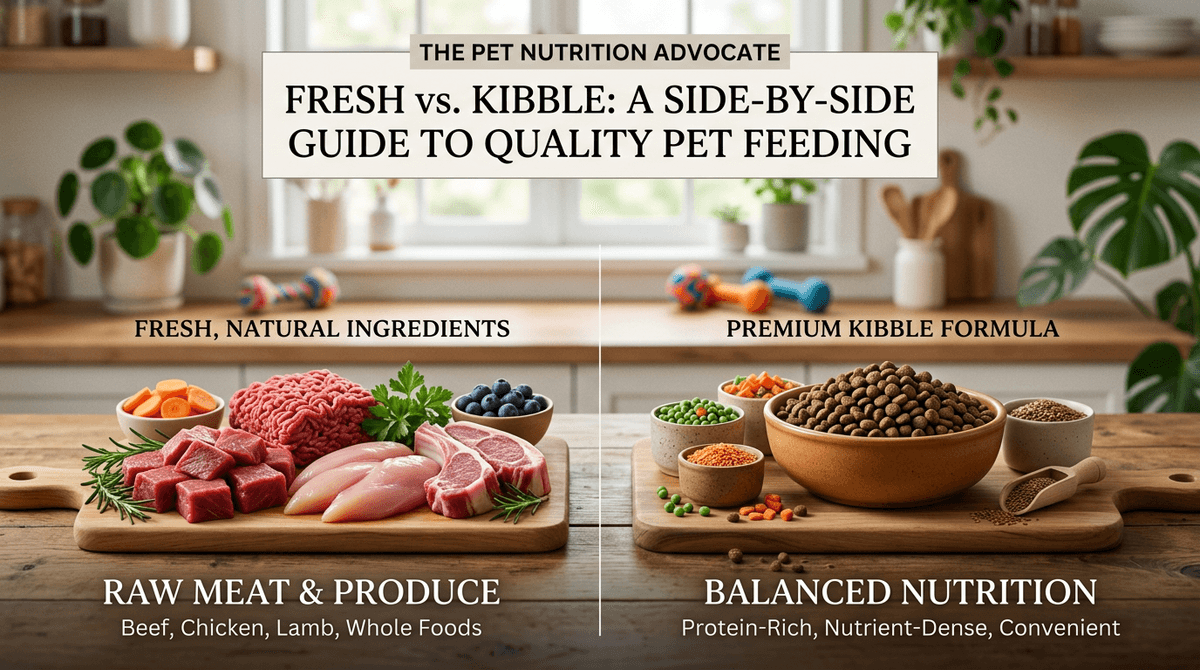
What exactly do these terms mean? Is fresh meat always better than a meat meal? Understanding the terminology regulated by the Association of American Feed Control Officials (AAFCO) is the key to seeing past the marketing and choosing a truly nutritious diet for your dog or cat.
What is "Fresh Meat" in Pet Food?
When an ingredient list says "Chicken," "Beef," or "Salmon" (without the word "meal" attached), it refers to the clean flesh of the animal. This is what we typically think of as fresh meat.
The Water Weight Illusion
Seeing "Chicken" as the first ingredient sounds fantastic, but there is a catch: ingredient lists are ordered by weight before cooking.
Fresh meat is composed of roughly 70% to 80% water. During the extrusion process (how dry kibble is made), the ingredients are cooked at high temperatures, and the vast majority of that moisture is cooked away.
Once the water is removed, that "Chicken" shrinks dramatically in weight. If the ingredient list were re-ordered after cooking, that fresh chicken might drop from the #1 spot down to the #4 or #5 spot, often falling behind heavy carbohydrate sources like corn, wheat, or rice.
What is a "Meat Meal"?
A "Meat Meal" (e.g., Chicken Meal, Lamb Meal, Salmon Meal) is meat that has already been cooked through a process called rendering.
Rendering involves cooking the meat at high temperatures to remove the water and bake off the fat. What is left is a highly concentrated, dry powder that is incredibly rich in protein and minerals (like calcium and phosphorus from the included bones).
The Protein Powerhouse
Because the water has already been removed before it is added to the pet food mixture, a meat meal is much more nutrient-dense than fresh meat. Pound for pound, Chicken Meal contains nearly 300% more protein than fresh Chicken.
Therefore, seeing a named meat meal (like "Turkey Meal") as the first or second ingredient is actually a very good sign. It indicates that the food contains a substantial amount of animal-based protein.
The Importance of "Named" Meats
Whether you are looking at fresh meat or meat meals, the most crucial rule of reading pet food labels is to look for named sources.
- Good: Chicken, Beef Meal, Salmon, Duck Meal. You know exactly what animal the protein is coming from.
- Bad: Meat, Meat Meal, Poultry Meal, Animal Fat. These are generic, anonymous ingredients. "Meat Meal" could be a mix of any mammals (pigs, cows, sheep) and can vary from batch to batch depending on what was cheapest for the manufacturer that week. Always avoid generic, unnamed meat sources.
What About By-Products?
"By-product" is perhaps the most misunderstood term in pet nutrition. A by-product is simply what is left over after the parts intended for human consumption have been removed.
In the wild, a wolf or a wildcat doesn't just eat the chicken breast; they eat the liver, the heart, the kidneys, and the spleen. These organ meats are incredibly rich in essential vitamins, minerals, and taurine.
- Named By-Products (e.g., Chicken By-Product Meal): Can be a highly nutritious source of protein and organ meat. However, the quality can vary between manufacturers. High-end brands use high-quality by-products (organs), while lower-end brands might use less digestible parts (feet, undeveloped eggs).
- Unnamed By-Products (e.g., Meat By-Products): Should be avoided, as the source animal is unknown.
Note: AAFCO regulations strictly prohibit hair, horns, teeth, and hooves from being included in by-products.
Which is Better: Fresh Meat or Meat Meal?
The truth is, high-quality kibbles usually utilize both.
A premium diet will often list a fresh meat as the first ingredient to provide high-quality, highly digestible amino acids, immediately followed by a named meat meal to boost the overall protein concentration of the food.
For example, an excellent ingredient panel might look like this: Deboned Chicken, Chicken Meal, Brown Rice, Turkey Meal, Chicken Fat...
Conclusion
Don't let marketing buzzwords trick you. While "Fresh Chicken" sounds appealing, remember the water weight illusion. Named meat meals are highly concentrated, excellent sources of protein for your pets. By learning to decode the ingredient list, you can confidently choose a diet that provides the optimal nutrition your furry best friend deserves.


