
Cats are notoriously finicky creatures, especially when it comes to their food. One day they absolutely love a specific brand of pâté, and the next day, they look at it with utter disdain. If you find yourself constantly throwing away uneaten cat food, you are not alone.
Unlike dogs, who are often motivated by smell and volume, a cat's eating habits are deeply tied to their evolutionary biology. In this article, we will dive into the fascinating world of feline dining preferences, focusing on texture, temperature, and environmental factors that can turn your picky eater into a happy diner.
Rule Out Medical Issues First
Before we discuss culinary tricks, it is vital to state that a sudden loss of appetite in a cat is a medical red flag. Cats who stop eating can rapidly develop a life-threatening condition called hepatic lipidosis (fatty liver disease).
If your cat hasn't eaten in 24-48 hours, or if their picky eating is accompanied by lethargy, vomiting, or weight loss, see your veterinarian immediately. Dental disease is a very common hidden cause of food refusal in felines.
The Importance of Texture (Mouthfeel)
Cats are highly sensitive to the texture, or "mouthfeel," of their food. In the wild, a cat's diet consists of freshly caught prey, which has a very specific texture profile. Commercial cat foods come in various textures, and most cats develop a strong preference early in life.
Common Wet Food Textures:
- Pâté: Smooth and uniform. Many cats love this, but others find it too sticky.
- Shredded/Flaked: Mimics the texture of torn meat.
- Chunks in Gravy: Meat pieces in a savory liquid. Many cats will lick the gravy and leave the chunks!
- Mousse/Broth: Very high moisture, light, and airy.
The Fix: If your cat is rejecting their food, try a completely different texture. If they hate pâté, offer shreds in broth. If they only lick the gravy, try mashing the chunks into the gravy to force them to eat the meat, or switch to a uniform pâté mixed with a little warm water.
Temperature Tricks: Why Cold Food is a Turn-Off
Imagine being served a cold, gelatinous hamburger straight from the fridge. Unappealing, right? Your cat feels the same way about cold wet food.
In the wild, cats eat their prey immediately after the hunt, meaning the food is at body temperature (around 101°F or 38°C). When you take a can of cat food out of the refrigerator and serve it cold, it lacks the strong aroma that stimulates a cat's appetite, and the temperature feels unnatural to them.
The Fix:
- Warm it up: Add a tablespoon of warm (not boiling) water to the cold food and mix it well. This not only warms the food but also increases hydration.
- Microwave carefully: You can microwave the food for 3-5 seconds, but be extremely careful. Stir it thoroughly to ensure there are no "hot spots" that could burn your cat's mouth. Test the temperature with your finger before serving.
Whisker Fatigue: Is the Bowl the Problem?
A cat's whiskers are incredibly sensitive tactile sensors. When a cat eats out of a deep, narrow bowl, their whiskers constantly rub against the sides. Over time, this sensory overload can cause discomfort or even pain, a condition commonly referred to as "whisker fatigue."
A cat experiencing whisker fatigue may pull food out of the bowl with their paw to eat it off the floor, or they may refuse to eat when the bowl is only half empty.
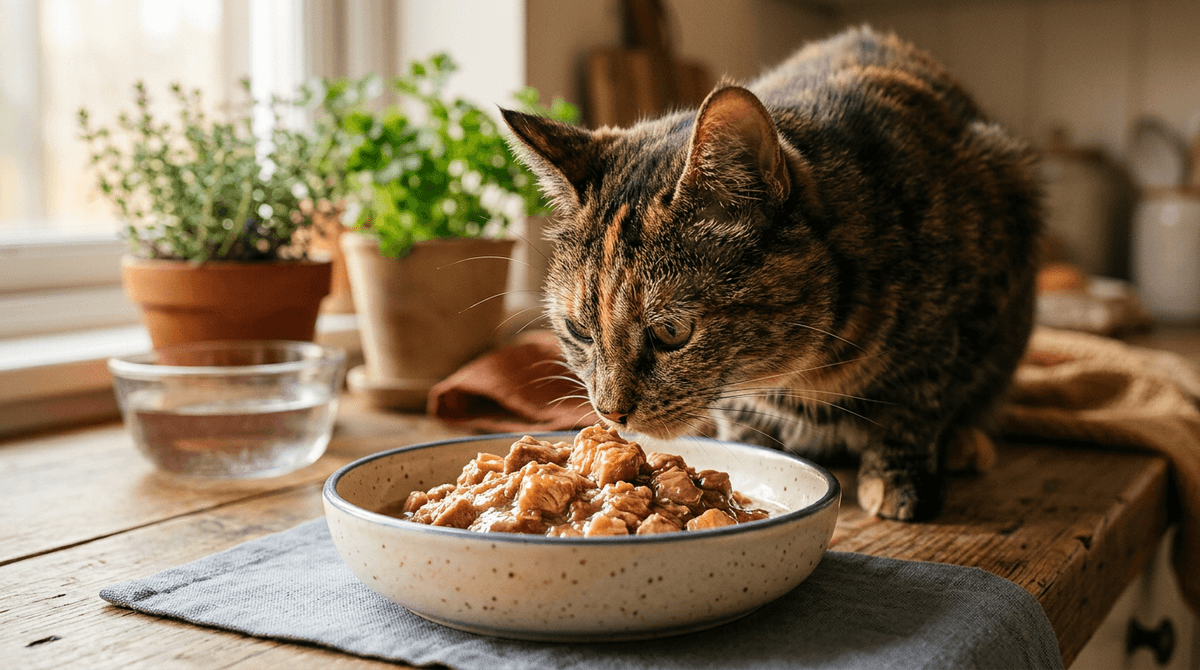
The Fix: Ditch the deep bowls. Serve your cat's meals on a wide, shallow plate or a specially designed whisker-relief bowl. You might be amazed at how quickly their appetite returns when eating is no longer uncomfortable.
Location, Location, Location
Cats are vulnerable when they eat, and their instincts demand a safe dining environment.
- Away from the Litter Box: Never put your cat's food and water near their litter box. You wouldn't want to eat in your bathroom, and neither do they.
- Quiet and Secure: Place the food bowl in a low-traffic, quiet area of the house.
- Separate from Other Pets: If you have multiple cats or dogs, feed the picky cat in a separate room. Competition and stress are major appetite suppressants.
Healthy Toppers for Cats
If you have optimized the texture, temperature, and bowl, but your cat still needs a little encouragement, try these healthy, feline-safe toppers:
- Nutritional Yeast: Many cats go crazy for the cheesy, umami flavor of nutritional yeast. Sprinkle a tiny pinch over their food.
- FortiFlora: This is a veterinary probiotic powder that happens to be coated in animal digest (the same flavoring used on dry kibble). Many cats find it irresistible.
- Freeze-Dried Meat: Crumble a piece of single-ingredient freeze-dried chicken or salmon over their wet food.
- Bonito Flakes: These paper-thin flakes of dried tuna are a high-value treat that can entice a stubborn eater.
Conclusion
Catering to a picky cat requires a bit of detective work. By understanding their biological preference for body-temperature food, respecting their texture biases, and ensuring their dining environment is stress-free and whisker-friendly, you can help your feline friend enjoy their meals again.


