
It’s one of the most loaded and fear-inducing words in the pet food industry: "filler." For decades, marketing campaigns have used this term to demonize certain ingredients, creating a narrative that many pet foods are bulked up with cheap, useless, and even harmful components. This has led to a generation of pet owners who diligently scan labels, guided by a simple mantra: "No corn, no wheat, no soy."
But what if the entire concept of a "filler" is a myth? What if these vilified ingredients actually provide valuable nutrition?
This article will pull back the curtain on the "filler" debate. We will explore what the term really means, analyze the most commonly targeted ingredients, and empower you to judge a pet food based on nutritional science, not just marketing slogans.
The term "filler" has no legal or scientific definition in pet nutrition. It is a marketing term, not a nutritional one. An ingredient that one brand calls a "filler," another brand might rightfully celebrate as a source of essential nutrients.
What Are People Really Talking About?
When pet owners talk about "fillers," they are generally referring to ingredients they believe are included for one reason: to cheaply increase the volume of the food without providing any significant nutritional value. Cereal grains like corn and wheat are the most common targets of this accusation.
How to Read Beyond the "Filler" Label
The implication is that these ingredients "fill up" your pet, preventing them from getting the high-quality, meat-based nutrition they truly need. As we'll see, this perception is a dramatic oversimplification of how these ingredients actually function in a well-formulated diet. A better question than "Does it contain corn?" is whether the diet as a whole delivers complete nutrition for your pet's life stage—and whether portions match their calorie needs.
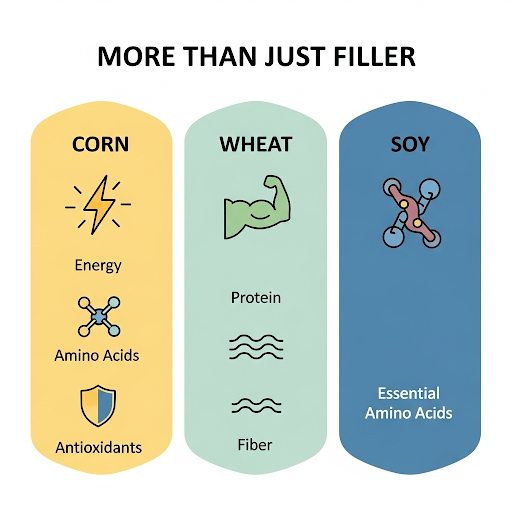
Analyzing the "Big Three" Accused Fillers
Let's take a science-based look at the three ingredients most often labeled as "fillers."
The Truth About Corn
Corn is perhaps the most misunderstood ingredient in pet food. Far from being empty calories, it provides a wealth of nutrients when properly processed.
- Energy: Ground corn is an excellent source of highly digestible carbohydrates, providing the readily available energy that fuels your pet's daily activities.
- Protein: Ingredients like "corn gluten meal" are a concentrated protein source that provides essential amino acids.
- Essential Fatty Acids: Corn contains linoleic acid, an essential omega-6 fatty acid vital for healthy skin and a vibrant coat.
- Antioxidants: It is a natural source of antioxidants like Vitamin E and beta-carotene.
- The Allergy Myth: While a corn allergy is possible, it is actually quite rare. Pets are far more likely to be allergic to common animal proteins like chicken or beef.
So, What's the Real Issue?
The problem isn't the presence of an ingredient like corn, but the balance and quality of the overall diet. A food that lists corn as its first ingredient and has very little animal protein is likely a lower-quality food. However, a meat-first formula that uses corn as a complementary source of energy and nutrients is a different story entirely.
The goal of a pet food formulator is to combine a variety of ingredients to create a final product that is 100% complete and balanced, with all the necessary proteins, fats, vitamins, and minerals. Grains and other plant-based ingredients are functional tools they use to achieve this precise nutritional balance. For a deeper dive, read our article, Debunking the "No Corn, No Wheat, No Soy" Myth.
By-Products and Other Maligned Ingredients
"By-products" and "meal" often get lumped in with fillers, but they are concentrated animal ingredients that can supply protein, minerals, and fat when properly processed. The issue is the same as with grains: judge the whole formula and the manufacturer's quality standards, not a single scary-sounding word on the label.
Matching Portions to Your Pet's Needs
Even the best-formulated diet fails if you over- or under-feed. Bag charts use broad weight ranges and ignore activity, spay/neuter status, and body condition. Start with your pet's actual calorie target using our pet nutrition calculator, then choose a complete food whose ingredients you trust.
The bottom line
The "filler" is a ghost—a marketing concept designed to sell food by creating fear around common, nutritious ingredients. The most important takeaway is to stop looking for villains on the ingredient list and start evaluating the diet as a whole.
Focus on these questions instead:
- Is the diet from a reputable manufacturer that conducts feeding trials and research?
- Is it "complete and balanced" for your pet's life stage?
- Does the diet work for your individual pet? Do they have good energy levels, a healthy coat, and well-formed stools?
These are the questions that truly matter more than whether a food contains corn.
Disclaimer: Pets with confirmed food allergies or intolerances need ingredient-level avoidance under veterinary supervision. This article addresses general nutrition myths, not individualized elimination diets.


