
When your dog has a sensitive stomach or possible food allergies, every meal can feel like a gamble: will this bowl lead to happy zoomies—or another night of diarrhea, vomiting, or itchy, sleepless scratching?
The good news is that diet is one of the most powerful tools you have to help a dog with digestive upset or suspected food reactions. The challenge is that the market is noisy: “sensitive stomach formulas”, “hypoallergenic”, “grain-free”, “limited ingredient”, “natural”… but which actually matter, and which are mostly marketing?
This guide pulls together veterinary nutrition principles with practical steps so you can choose the best food for dogs with sensitive stomachs and allergies, and use tools like our pet calorie calculator to get the portions right.
Step 1: Understand What “Sensitive Stomach” Really Means
“Sensitive stomach” is a broad, non-medical phrase owners and brands use for:
- Chronic or recurring diarrhea
- Soft or mushy stools
- Intermittent vomiting, especially after meals
- Excess gas, borborygmi (gurgling tummy sounds)
- Poor appetite or picky eating linked to GI discomfort
Sometimes these signs reflect:
- A true food allergy or food intolerance
- Dietary indiscretion (your dog eating things they shouldn’t)
- Underlying disease (inflammatory bowel disease, pancreatitis, parasites, endocrine disease, etc.)
Important: Any dog with bloody stool, weight loss, persistent vomiting, lethargy, or pain needs a veterinary exam before diet changes. Food alone cannot fix serious disease.
For milder, chronic signs—after medical causes are ruled out or treated—diet adjustments are often the main long‑term tool.
Step 2: Rule Out Red Flags That Require a Vet
Before you start trial‑and‑error with foods, look for red flags that mean “see a vet first”:
- Weight loss despite normal or increased appetite
- Black, tarry, or bloody stools
- Frequent vomiting (more than once a week, or any vomiting with blood)
- Severe abdominal pain, hunched posture, or refusal to eat
- Profuse watery diarrhea, especially in puppies or seniors
- Lethargy, fever, or dehydration
Your vet can:
- Check for parasites, infections, pancreatitis, endocrine disease
- Decide whether your dog needs prescription GI diets (e.g. low‑fat, highly digestible)
- Help plan and monitor any elimination diet for suspected allergies
Once your vet clears serious issues or sets a plan, you can choose diet more safely.
Step 3: Know the Main Diet Types for Sensitive Stomachs & Allergies
1. Highly Digestible “Sensitive Stomach” Diets
These diets focus on being easy to digest:
- Moderate fat content
- Highly digestible protein and carbohydrate sources (e.g. chicken and rice, turkey and rice)
- Added prebiotic fiber and sometimes probiotics
They are often good first options for dogs with mild GI upset who do not have a confirmed food allergy.
2. Limited‑Ingredient Diets (LID)
Limited‑ingredient diets aim to reduce variables:
- One main protein source and one main carbohydrate
- Shorter ingredient list
- Often use novel proteins (e.g. duck, venison) your dog has not eaten before
These can help dogs with suspected food reactions by making it easier to identify triggers. Quality matters: some “limited ingredient” labels still contain many extras—always read the ingredient list carefully.
3. Veterinary Prescription Hypoallergenic Diets
For dogs with true food allergies (confirmed or strongly suspected), vets often recommend:
- Hydrolyzed protein diets (proteins broken into tiny fragments the immune system is less likely to recognize)
- Novel‑protein prescription diets (e.g. hydrolyzed soy, or strictly controlled rabbit/potato formulas)
These are formulated and tested specifically for allergy management. They are usually more reliable than over‑the‑counter “hypoallergenic” foods.
4. Low‑Fat Gastrointestinal Diets
Some dogs (especially those with pancreatitis or chronic gastrointestinal issues) do better on:
- Low‑to‑moderate fat
- Highly digestible carbohydrate and protein sources
- Sometimes increased soluble fiber
These are usually prescription and should only be started under veterinary guidance.
Step 4: Ingredient Patterns That Often Help (and Hurt)
Every dog is different, but some patterns are common.
Ingredients That Often Help Sensitive Stomachs
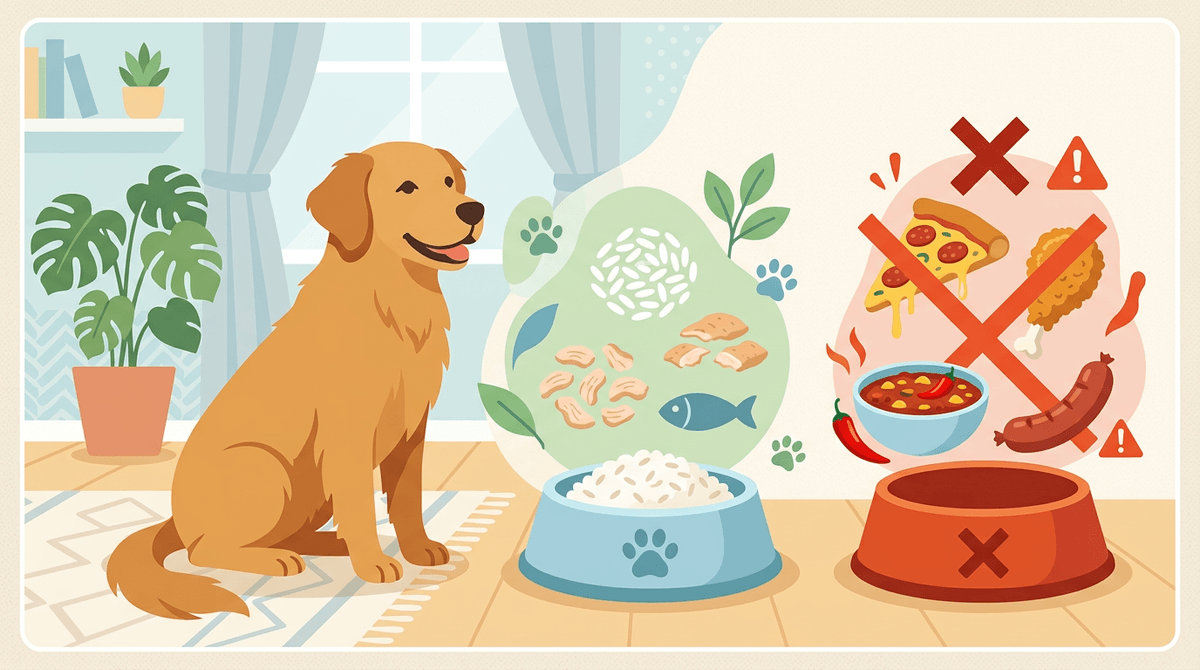
- Highly digestible proteins: chicken, turkey, egg, some fish
- Easily digested carbohydrates: white rice, potato, some refined grains
- Moderate fat levels: not extremely high‑fat formulas
- Prebiotic fibers: beet pulp, inulin, certain mixed fibers to support gut bacteria
- Omega‑3 fatty acids: from fish oil or algae (help modulate inflammation)
Look for AAFCO‑complete and balanced diets with these traits—see The AAFCO Statement for how to verify completeness.
Ingredients That Can Cause Trouble (for Some Dogs)
- Very high fat diets, rich, greasy foods, table scraps
- Multiple protein sources all in one formula (harder to do a true elimination trial)
- Common allergens for dogs (chicken, beef, dairy, wheat, soy) in allergic individuals
- Artificial colors and some unnecessary flavorings (more potential triggers)
- Excess treats and chews, especially high‑fat ones (bully sticks, pig ears, etc.)
None of these are always bad, but they can be problematic in sensitive dogs.
Step 5: How to Choose the Best Food for Your Dog
Use this decision framework:
Scenario A: Mild Sensitive Stomach, No Clear Allergy Signs
Signs: Occasional loose stool, gas, soft stools, upset with diet changes; no chronic itching, ear infections, or skin issues.
Good starting points:
- A highly digestible “sensitive stomach” formula from a reputable brand
- Consistent feeding schedule and avoiding frequent brand/flavor changes
- Strict treat control (see the 10% treats rule)
If signs improve within 2–4 weeks, stick with the new food and monitor body condition with BCS.
Scenario B: Digestive Signs Plus Itchy Skin or Ear Infections
Signs: Soft stool or vomiting and chronic itching, licking paws, recurrent ear infections.
This pattern raises suspicion for a food allergy or intolerance.
Best approach (with your vet):
- Plan a strict elimination diet trial using either:
- A hydrolyzed prescription diet, or
- A novel‑protein, limited‑ingredient diet with a protein your dog has never eaten
- Feed only that diet (no other treats, flavored meds, table scraps) for 8–12 weeks
- Track symptoms and stool quality over time
If signs clearly improve and return when old foods are reintroduced, a food allergy is likely.
Scenario C: History of Pancreatitis or Serious GI Disease
This is not a DIY situation. Your vet will likely prescribe:
- A low‑fat gastrointestinal diet (often < 15–20% fat on a dry‑matter basis)
- Strict treat limitations, avoiding all high‑fat snacks
Here the “best food” is the one your vet recommends, and portions should be calculated carefully based on MER—see MER Explained.
Step 6: Get Portions Right—Too Much Can Look Like “Sensitivity”
Even the perfect food can cause problems if you overfeed it.
- Overfeeding leads to loose stool, gas, and vomiting that look like “sensitive stomach”
- Many bags overestimate portions for real‑world pets—see The Problem with Feeding Guidelines on Pet Food Bags
Use this three‑step method:
- Calculate MER: Use our pet calorie calculator to get your dog’s daily calorie target (MER), accounting for life stage, activity, spay/neuter status, and weight goal.
- Use the calorie statement: Read the calorie statement on the new food (kcal per cup/100 g).
- Divide calories by density: MER ÷ kcal per cup = cups per day (or grams per day), then split into meals.
Then monitor body weight, BCS, and stool quality and adjust by ~5–10% up or down as needed.
Step 7: How to Transition to a New Food Safely
Sensitive dogs often react badly to abrupt changes—even if the new food is better.
Follow a 7–10 day transition (or longer for very sensitive dogs), as in Why You Shouldn’t Switch Your Pet’s Food Suddenly:
| Day | Old food | New food |
|---|---|---|
| 1–2 | ~75% | ~25% |
| 3–4 | ~50% | ~50% |
| 5–6 | ~25% | ~75% |
| 7–10 | 0% | 100% |
- Keep total daily calories the same while you change the ratio
- Avoid adding new treats or table scraps during transition
- If diarrhea or vomiting appear, pause at the current ratio or step back and advance more slowly
Step 8: Treats, Chews, and Table Scraps—The Hidden Saboteurs
You can pick the best diet in the world and still lose the battle if treats and extras undo your efforts.
- Keep treats within the 10% rule
- Avoid high‑fat chews for sensitive dogs (pig ears, greasy leftovers)
- Beware “healthy” add‑ons like peanut butter or cheese—calorie‑dense and often high‑fat
- If you’re running an allergy elimination diet, all flavored products (toothpaste, monthly chews, flavored meds) must be checked with your vet
For sensitive dogs, it’s often best to use portion‑controlled kibble from their main diet as training treats.
Step 9: Example Diet Scenarios (What “Best Food” Might Look Like)
These are examples, not personal medical advice. Always confirm with your veterinarian.
Example 1: Young Adult Dog, Intermittent Soft Stools, No Skin Issues
- Vet exam is normal, parasite tests negative
- You choose a highly digestible, AAFCO‑complete sensitive stomach formula from a major brand
- Use MER and the calorie statement to calculate precise portions
- Transition over 7–10 days and keep treats <10% of calories
If stool normalizes and stays normal, you likely found a good match.
Example 2: Middle‑Aged Dog, Soft Stool + Itchy Paws & Chronic Ear Infections
- Vet suspects food allergy after ruling out infections and parasites
- You start a hydrolyzed protein prescription diet for 8–12 weeks, nothing else
- Symptoms improve significantly; challenge with old food brings them back
In this case the “best food” is a long‑term hypoallergenic diet selected by your vet, not a random over‑the‑counter LID.
Example 3: Dog with History of Pancreatitis
- Vet prescribes a low‑fat GI diet and strict fat restriction
- You calculate portions from MER and the kcal per cup
- You avoid all high‑fat treats and human foods
Here, following the low‑fat prescription exactly is more important than brand hype.
Step 10: When to Re‑Evaluate the Diet
Even when things are going well, plan to reassess periodically:
- At least every 6–12 months, or sooner if:
- Stool quality changes for more than a few days
- Weight drifts up or down by >5%
- Itching, ear issues, or skin problems return
- Activity level, life stage, or health status changes
Keep a simple log of:
- Food brand and formula
- Portion size (cups or grams per day)
- Treats/chews given
- Any GI or skin symptoms and their dates
This log is incredibly valuable to your vet if problems resurface.
The Bottom Line
There is no single universal “best food” for every dog with a sensitive stomach or allergies. The best food for your dog is:
- Complete and balanced (AAFCO‑compliant)
- Matched to your dog’s underlying condition (simple sensitivity vs true allergy vs pancreatitis vs other disease)- Highly digestible, with appropriate fat and fiber
- Fed in correct portions based on MER- Introduced gradually, with treats and extras under tight control
Use this article as a roadmap, but always bring your veterinarian into the conversation—especially if your dog has severe or persistent symptoms.
To turn this guidance into exact daily portions for whatever food you choose, use our pet meal planner. It combines RER, MER, and your dog’s body condition and goals to give you precise, vet‑aligned feeding recommendations that support a calmer stomach—and a much happier dog.


