
Key takeaways
- Cat food labels usually emphasize protein and fat; carbohydrate is often not printed as a line item.
- You can estimate carbs indirectly using proximate analysis components—but the result is an estimate, not a laboratory guarantee.
- Dry matter basis is the right lens when comparing wet vs dry products.
- If you need exact carb values for medical feeding (e.g., diabetes management), your veterinarian should guide decisions—do not rely on internet math alone.
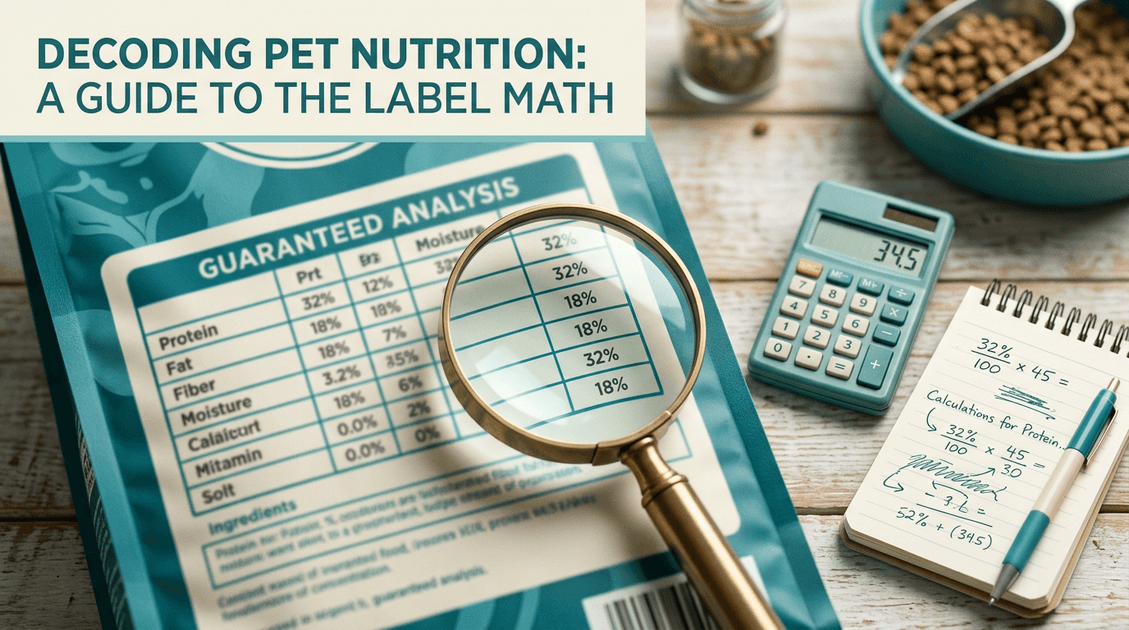
Cat owners comparing wet foods, dry foods, and “fresh” formats often hit the same wall: Where are the carbs? Dogs and cats both eat diets where carbohydrate content matters for certain medical and behavioral discussions, but labels can make direct comparison feel impossible.
This guide teaches a widely used estimation approach used by savvy owners and professionals—while being explicit about where uncertainty lives.
Why carbs aren’t printed as a single number
In many products, carbohydrates are not a single ingredient; they are what’s left after accounting for other proximate fractions (within the limits of how pet food labeling works).
That means “carb percentage” is often derived, not read.
What you need from the label
From the Guaranteed Analysis, you typically see:
- Crude protein (min)
- Crude fat (min)
- Crude fiber (max)
- Moisture (max)
Some labels include additional detail; ash may or may not be explicit depending on presentation.
The conceptual formula (as-fed vs dry matter)
A common estimation approach starts with the idea that proximate fractions must sum within reason:
Carbohydrate (estimated) ≈ 100% − protein − fat − fiber − ash − moisture (conceptually)
But you cannot plug crude guarantees into that equation naively without:
- Converting to dry matter for comparisons across moisture levels
- Recognizing min/max constraints (a “min protein” is not the same as “exact protein”)
Dry matter conversion (the piece most owners skip)
If you have as-fed numbers, dry matter helps you compare canned vs kibble fairly.
Dry matter percentage ≈ 100% − moisture
Then you can express protein/fat/fiber on a dry matter basis:
DM% of nutrient = (as-fed% ÷ as-fed dry matter fraction)
If you want a full walkthrough of dry matter thinking, read:
A practical “good enough” workflow for shopping comparisons
- Shortlist foods with your veterinarian if there is a medical indication.
- For each candidate, collect GA lines and moisture.
- Convert key nutrients to dry matter for apples-to-apples comparison.
- Use carbohydrate estimation as a ranking signal, not a clinical prescription.
Why estimates drift (limitations, honestly stated)
Min/max guarantees are not exact compositions
A “minimum crude protein” does not tell you the true protein level—only that it meets at least that threshold.
Ash may be missing or assumed
Some back-of-the-envelope estimates assume a typical ash range; real ash varies by formulation.
Fiber isn’t “carbs” in a simple way for physiology
Dietary fiber is carbohydrate-related structurally, but fermentability and calorie contribution differ from starch.
Because of these issues, treat your estimate as directionally useful, not exact.
Cats, carbs, and the bigger nutrition picture
Cats are obligate carnivores in the nutritional sense used in pet food discussions—protein and certain nutrients matter a lot. Carbohydrate discussions online can become ideological fast.
If you want species-appropriate framing without myth-busting drama, these are strong on-site primers:
- Obligate carnivores: why your cat is a hunter at heart
- Carbohydrates in your pet’s bowl: friend or foe?
- High protein cat food: how much cats need
Indoor cats, calories, and “carb talk”
If your goal is weight management, total calories and body condition often matter more than a carb estimate alone:
FAQ
Is lower carb always better for cats?
Not automatically. Medical needs, palatability, tolerance, and calorie control matter. Some cats need therapeutic approaches your veterinarian should direct.
Can I use this estimate for a diabetic cat?
Use your veterinarian’s feeding plan. Diabetes management is not a DIY label-math project.
Does PetMealPlanner replace lab analysis?
No. We help you think about calories and body condition with practical tools.
Conclusion
Estimating carbohydrates from guaranteed analysis is a useful skill for comparison shopping—as long as you respect uncertainty. Convert to dry matter, compare fairly, and involve your veterinarian for medical diets.
Disclaimer: Educational information only. For diabetes, GI disease, or prescription diet decisions, follow your veterinarian.


