
Grain-free dog food became a huge trend—driven by the idea that grains are "fillers" or that dogs do better without them. Then the FDA raised concerns about a possible link between certain grain-free diets and dilated cardiomyopathy (DCM) in dogs. So what does the science actually say about grain-free vs. grain-inclusive dog food, and how should you choose?
This guide summarizes what we know: the role of grains in dog nutrition, the DCM concern, and how to pick a diet that's complete and balanced and portioned right—using our pet calorie calculator.
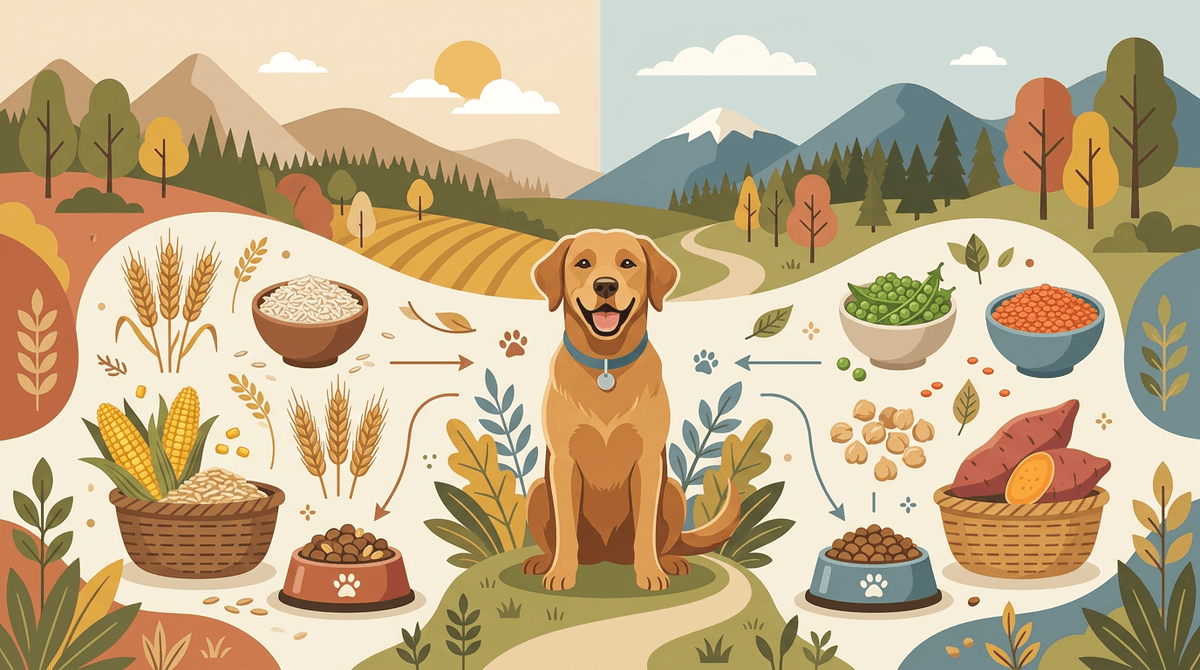
What "Grain-Free" and "Grain-Inclusive" Mean
- Grain-free: No wheat, corn, rice, barley, oats, etc. Carbohydrates often come from peas, lentils, chickpeas, potatoes, or sweet potato.
- Grain-inclusive: Contains one or more grains (e.g., rice, oats, barley, corn) as ingredients.
Both can be AAFCO complete and balanced. The presence or absence of grains does not, by itself, make a diet "good" or "bad."
Are Grains Bad for Dogs?
No. Dogs are omnivores and can digest and use grains. Grains provide energy, fiber, and some nutrients. Quality grain-inclusive diets have been fed safely for decades. "Grains are fillers" is a marketing myth—see Debunking "No Corn, No Wheat, No Soy". Allergies to grains exist but are less common than allergies to animal proteins (e.g., chicken, beef).
So there is no scientific reason that most dogs need a grain-free diet. Some dogs do well on grain-free; others do well on grain-inclusive. The formula and the company matter more than the grain yes/no.
The Grain-Free and DCM Concern
Starting around 2018, the FDA reported cases of dilated cardiomyopathy (DCM)—a heart muscle disease—in dogs eating certain grain-free diets, often those that listed peas, lentils, legumes, or potatoes high in the ingredients. Many of these dogs were breeds not typically prone to DCM (e.g., Golden Retrievers).
What we know:
- A statistical association was observed between some grain-free/legume-heavy diets and DCM. It is not yet fully proven that these diets cause DCM.
- Possible factors under study: taurine deficiency (some diets or ingredients might affect taurine absorption or metabolism), other nutrient interactions, or unknown factors. See Taurine for Dogs: Heart Health, DCM, and the Grain-Free Debate.
- The FDA has not concluded that all grain-free diets are dangerous, but it recommends that pet owners and vets be aware and that manufacturers ensure adequate nutrient profiles.
Practical takeaway: If your dog is on a grain-free diet, especially one heavy in peas/lentils/legumes, discuss it with your vet. If your dog has no medical reason to avoid grains, a grain-inclusive diet is a safe, evidence-based choice. If you prefer or need grain-free (e.g., suspected grain allergy), choose a brand with strong formulation and quality control and stay under veterinary guidance.
How to Choose: Grain-Free vs. Grain-Inclusive
- For most dogs: A grain-inclusive, AAFCO complete and balanced diet is a low-risk, science-backed option. Grains are not harmful when the diet is well formulated.
- If you choose grain-free: Prefer brands with a long history of feeding trials and clear formulation. Avoid formulas that rely heavily on peas, lentils, or legumes as primary ingredients if you're concerned about DCM; discuss with your vet.
- For suspected grain allergy: True grain allergy is uncommon. If your vet suspects it, they may recommend an elimination diet or a limited-ingredient diet; that might be grain-free or use a single grain. Don't assume grain-free is "hypoallergenic."
In all cases: complete and balanced for the life stage, and correct portions using MER and the calorie statement. See The Problem with Feeding Guidelines on Pet Food Bags.
Portions Matter More Than Grain Yes/No
Whether the diet is grain-free or grain-inclusive, overfeeding causes obesity and related problems. Use:
- MER for your dog's daily calorie target.
- The calorie statement on the bag (kcal per cup or per 100 g).
- MER ÷ kcal per serving = daily amount. Split into meals; keep treats within the 10% rule.
Our pet meal planner does this for you.
The Bottom Line
Grain-free vs. grain-inclusive: Grains are not bad for dogs; grain-inclusive diets are a safe, evidence-based choice for most. Grain-free diets have been associated in FDA reports with DCM in some dogs, especially formulas high in peas, lentils, or legumes; the exact cause is still under study. Choose a complete and balanced diet (grain-free or grain-inclusive) from a reputable brand, discuss grain-free with your vet if you use it, and always portion by calories using MER and the calorie statement.
For exact daily portions for your dog, use our pet meal planner. It uses RER, MER, and body condition so you can feed any diet—grain-free or grain-inclusive—with confidence.


